 (702) 333-8057
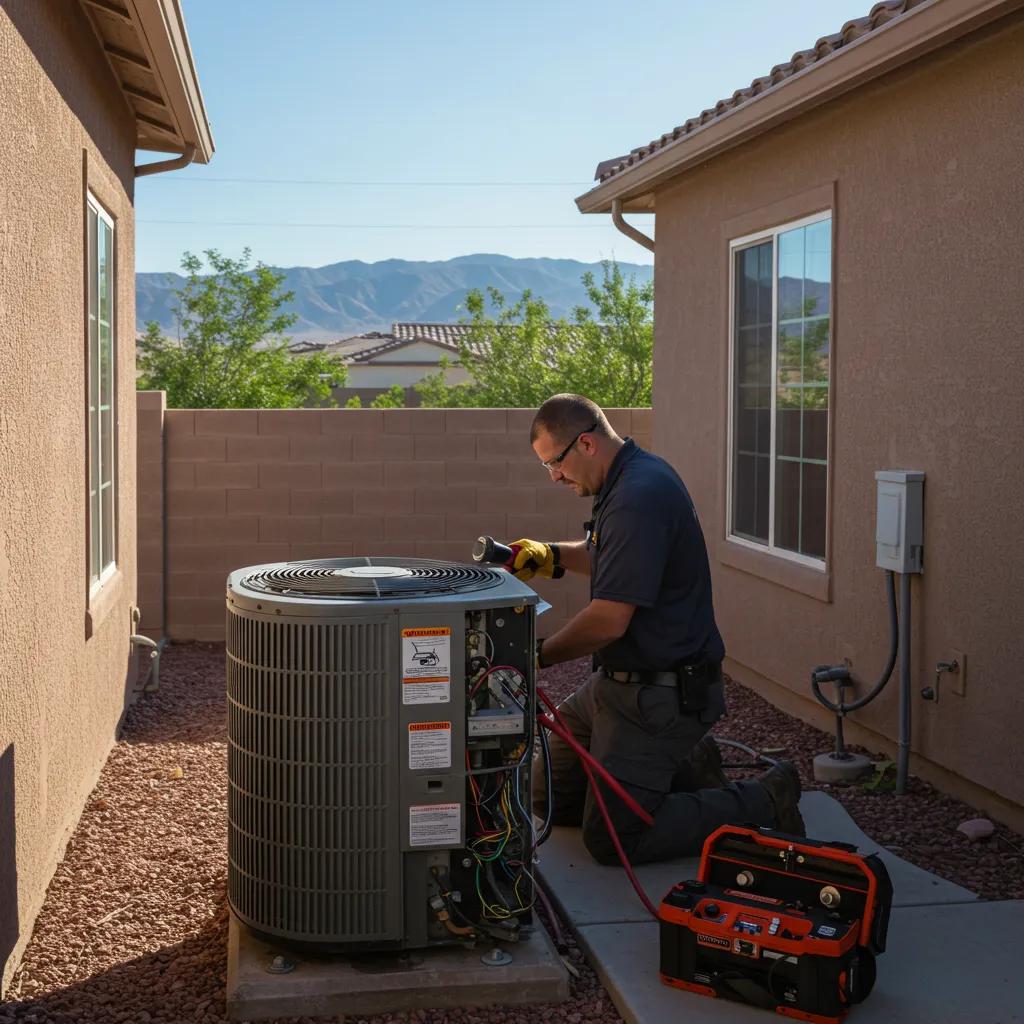
Emergency AC Repair Services in Las Vegas: 24/7 Quick Solutions for Urgent Cooling Needs
Las Vegas summer heat can make an AC failure an immediate health and comfort emergency, and emergency AC repair services are the fast-response solutions homeowners need. This article explains how emergency AC repair works, how to spot urgent failures, and what immediate steps to take while waiting for service. It also maps common breakdown causes to likely fixes and describes the service process from dispatch to repair and follow-up. You will learn the most frequent emergency problems in Las Vegas, how technicians diagnose them, how to access 24/7 emergency response across local neighborhoods, and what cost drivers and financing options you should expect. The guidance includes practical homeowner checks, typical on-site repairs, and clear next steps to minimize downtime. Read on to get focused, actionable information about urgent AC repair, immediate safety steps, and realistic expectations for response and resolution.
What Are the Most Common Emergency AC Problems in Las Vegas?
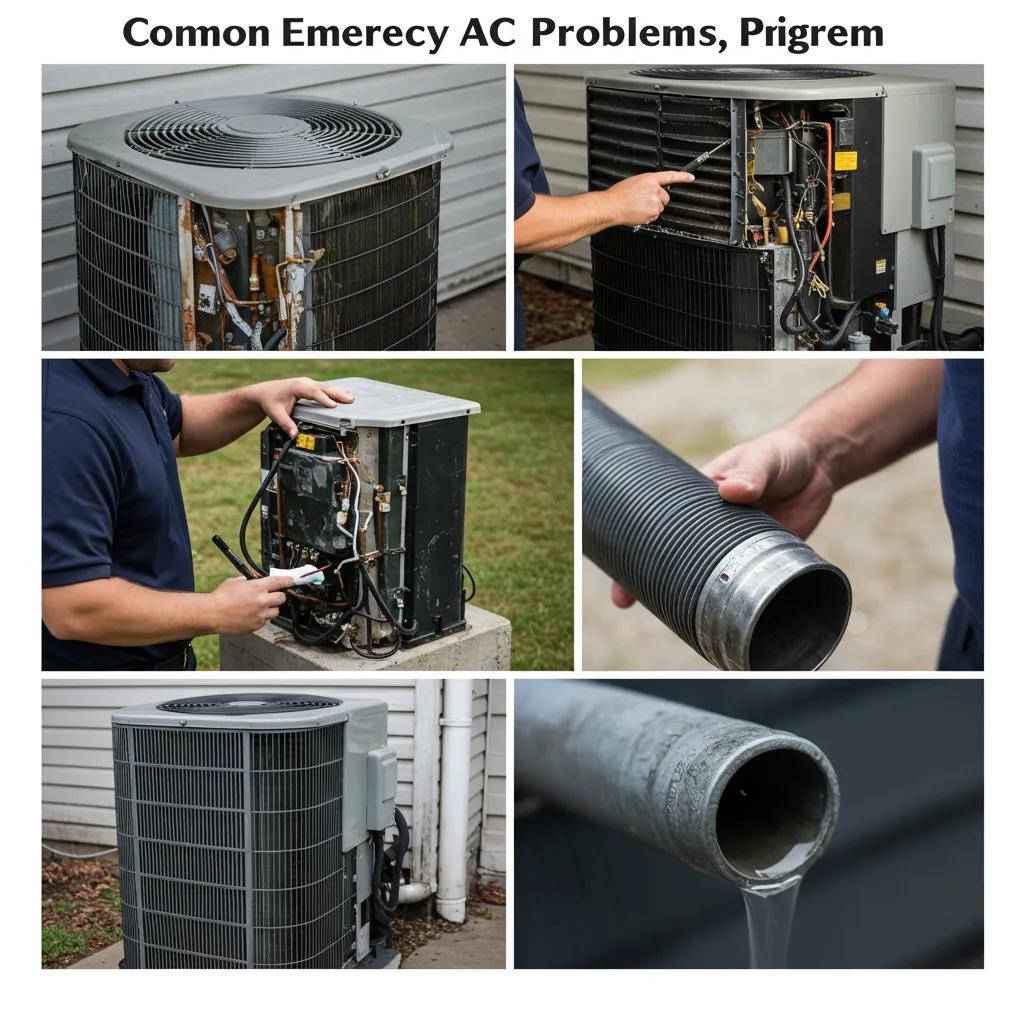
Emergency AC problems are sudden failures that stop cooling or create unsafe conditions; they occur because high heat loads, prolonged runtime, and component wear push systems beyond limits. The mechanism behind many emergencies is overload: excessive heat increases system pressure and stress, which leads to mechanical failures or refrigerant issues and produces immediate loss of cooling. Quick identification saves time and prevents further damage. Below is a short list of frequent emergency problems and a concise summary of homeowner checks to narrow causes before the technician arrives.
Common emergency AC issues in Las Vegas include:
- No cooling or warm air coming from vents, indicating loss of refrigerant or compressor failure.
- Loud mechanical noises or grinding that suggest fan motor or compressor problems.
- Water leaks or clogged drain lines that can cause indoor flooding and electrical risk.
- Electrical failures such as tripped breakers or bad capacitors that stop the system immediately.
These checks help owners triage the problem and prepare for technician arrival.
How to Identify AC Not Cooling or Blowing Warm Air
AC not cooling means the system cannot remove heat from the house, typically due to low refrigerant, compressor faults, or airflow restrictions. Start with quick homeowner checks: confirm thermostat settings, inspect the air filter for heavy dirt, and verify breakers have not tripped. If the condensers outside are running but vents blow warm air, the cause often involves refrigerant or compressor failure and usually requires urgent service. Perform only safe visual checks and avoid opening electrical panels; these initial observations will speed the technician’s diagnosis.
What Causes Refrigerant Leaks and How Are They Fixed?
Refrigerant leaks arise from corroded lines, vibration wear, or punctures in coils and tubing and they reduce cooling capacity rapidly. Technicians detect leaks with electronic detectors or dye tests, repair or replace affected lines or coils when feasible, and then recharge the system to the correct refrigerant level. Because refrigerant handling requires trained technicians, this is an emergency where on-site diagnostic evidence determines whether a quick patch and recharge or a more extensive repair is needed. Proper leak repair restores efficiency and prevents repeat failures.
How to Recognize Loud or Noisy AC Units Needing Immediate Repair
Unusual noises—grinding, banging, or burning smells—often indicate imminent mechanical failure in motors, compressors, or loose components and warrant shutting the unit off. Grinding typically signals motor or bearing failure, banging can mean a broken fan blade or loose part, and burning odors suggest electrical arcing or a failing capacitor; all require immediate technician attention. If dangerous sounds or smells appear, power down the system to avoid fire risk and note the sound characteristics for the arriving technician. Recording these observations accelerates diagnosis and reduces time-to-repair.
| Problem | Likely Cause | Immediate Action / Typical Fix |
|---|---|---|
| No cooling | Low refrigerant or compressor failure | Check thermostat and filter; technician tests refrigerant and compressor, then repair/replace and recharge |
| Loud grinding | Motor or bearing failure | Power down unit; technician inspects motor and replaces bearings or motor assembly |
| Water leaking | Clogged drain line or damaged pan | Shut off system; clear drain or replace pan and reseal as needed |
| Electrical trips | Failed capacitor or wiring fault | Turn off breaker; technician performs electrical diagnostics and replaces faulty components |
How Does Ace Services Provide Fast and Reliable 24/7 Emergency AC Repair?
Fast, reliable 24/7 emergency AC repair centers on rapid dispatch, accurate diagnostics, and technician readiness to act on-site to restore cooling quickly. The mechanism is simple: quick triage over the initial call prioritizes dangerous conditions, then technicians use diagnostic tools to identify the failing component and provide an immediate fix or safe temporary repair. The benefit is minimized downtime and reduced risk of secondary damage to the home. Below is a concise description of how a local provider organizes rapid response and skilled repair.
Ace Services offers 24/7, 365-day emergency service with factory-trained technicians who perform rapid diagnostics to determine cause and next steps. These technicians are experienced with major brands including Daikin, Lennox, Trane, Carrier, Rheem, Goodman, York, Tempstar, and Airtemp, enabling efficient on-site decisions. Rapid diagnostics allow many faults to be repaired the same day through part replacement or temporary fixes that restore cooling while permanent parts are sourced. This rapid model reduces time without AC and aligns technician tools with real-world Las Vegas emergency conditions.
What Makes Our Certified HVAC Technicians Experts in Emergency Repairs?
Factory-trained technicians bring focused knowledge of common failure modes and brand-specific system layouts, which speeds accurate diagnosis and repair. Their training emphasizes safe electrical handling, refrigerant procedures, and efficient part replacement so they can resolve many emergencies during the first visit. This expertise reduces repeated callbacks and shortens total downtime for homeowners. Skilled technicians also prioritize clear communication about fixes and next steps, which prepares owners for any necessary follow-up work.
How Rapid Diagnostics and Part Replacement Ensure Quick Solutions
Rapid diagnostics use structured tests—visual inspection, pressure readings, and electrical checks—to localize faults quickly and determine whether a repair or replacement is required. When common parts are available, technicians perform immediate part replacement to restore function the same day; when parts must be ordered, they implement safe temporary measures to preserve the home environment. This diagnostic-to-repair workflow shortens resolution time and reduces the chance of escalation into larger failures. Clear diagnostics also help produce transparent estimates for homeowners.
What Should You Expect During an Emergency AC Repair Service Call?

An emergency AC repair call moves from intake and triage to on-site diagnosis and resolution, following a clear sequence that prioritizes safety and speed. The mechanism starts with dispatch and an estimated arrival window, continues with safety and performance checks on-site, and concludes with a repair, temporary measure, or replacement recommendation. The benefit is a clear path from problem to fix with communication at each step. Below are the expected steps and homeowner actions to streamline the visit.
When Ace Services handles emergency calls, the typical flow includes rapid diagnostics, part replacement where possible, and clear technician guidance on options; technicians conduct necessary safety checks before starting repairs. This company process focuses on restoring cooling quickly through accurate on-site decisions and transparent next steps. Having unit details and observed symptoms ready speeds diagnosis and helps the technician begin work immediately.
- Dispatch and ETA provided, with triage questions to prioritize hazards.
- Technician inspects system, performs diagnostics, and explains findings.
- On-site repair or temporary safe measure implemented; parts ordered if needed.
- Technician reviews work and next steps and schedules follow-up if required.
These steps set expectations and ensure homeowners remain informed from call to resolution.
How Does the Emergency Repair Process Work from Call to Resolution?
The process begins with a focused intake that identifies safety risks and symptoms, then dispatch prioritizes the call based on severity and location. On arrival, the technician performs a rapid diagnostic sequence—visual, electrical, and pressure checks—to identify root cause and confirm whether an on-site repair is possible. If parts are available, the technician replaces failed components and validates system performance before leaving; if not, they secure a safe temporary fix and schedule follow-up parts installation. Clear communication about timelines and options helps homeowners decide on repair or replacement.
What Are the Typical Repair Solutions for AC Breakdowns in Las Vegas?
Typical on-site emergency repairs include refrigerant recharge and leak repair, capacitor or fan motor replacement, and minor compressor or control module swaps when possible. Some failures require ordering specific parts or more extensive compressor replacement, which takes longer and may need temporary measures in the interim. Technicians prioritize same-day fixes when feasible to restore cooling immediately and will explain when longer repairs are necessary. Understanding typical solutions helps homeowners weigh options and plan for follow-up service.
- Common same-day fixes include refrigerant recharge, capacitor replacement, and fan motor swaps.
- Repairs that may require parts ordering include compressor rebuilds and coil replacements.
- Temporary measures can preserve cooling until full repairs complete.
These repair options clarify likely outcomes and timelines for emergency calls.
How Can You Access 24/7 Emergency AC Repair Services Across Las Vegas and Nearby Areas?
Accessing emergency AC repair involves knowing service coverage, preparing essential information for dispatch, and understanding response variability by neighborhood and time of day. The mechanism here is service area mapping plus triage to dispatch the nearest available technician quickly, which benefits homeowners by reducing travel time and speeding resolution. Below is a practical guide to coverage and how to prepare for immediate service.
Ace Services provides emergency coverage in Las Vegas, Henderson, North Las Vegas, and Summerlin as part of local service availability. When requesting emergency assistance, confirm coverage for your address during intake and provide unit details and symptom descriptions to speed dispatch. The list below shows typical coverage notes by neighborhood to guide expectations.
| Neighborhood | Typical Response Note | Coverage |
|---|---|---|
| Las Vegas | Central neighborhoods usually have fastest response | Covered |
| Henderson | Suburban areas served with on-call technicians | Covered |
| North Las Vegas | Rapid dispatch available in populated zones | Covered |
| Summerlin | Neighborhood coverage subject to technician availability | Covered |
Which Neighborhoods and Cities Are Covered by Ace Services Emergency Services?
Service areas include Las Vegas, Henderson, North Las Vegas, and Summerlin, covering a wide range of residential neighborhoods where emergency response is prioritized. Coverage may vary by technician availability and dispatch load, so confirming service during the initial call sets expectations for arrival windows. Providing unit make, model, symptoms, and exact address speeds triage and helps the dispatcher route the closest qualified technician. Knowing coverage zones guides decisions about alternative temporary cooling if delays occur.
How to Contact Ace Services for Immediate Emergency AC Assistance
When preparing to request emergency help, gather key details: exact address, unit brand and model if known, symptom descriptions, and any safety concerns such as leaks or burning smells. Communicate these details clearly during intake to enable rapid diagnostics and appropriate dispatch. While waiting, follow safety guidance: shut down the unit if you detect burning smells, avoid electrical panel exposure, and keep occupants hydrated if cooling is lost. Clear preparation reduces time-to-resolution and increases safety. Contact us for help.
- Provide address, symptoms, unit brand/model, and any hazards during intake.
- Note whether the system shows lights, noises, leaks, or warm airflow.
- Follow safety steps like powering down for burning smells and keeping people cool.
These steps help dispatch the right technician quickly and ensure safety while waiting.
What Are the Typical Costs and Financing Options for Emergency AC Repair in Las Vegas?
Emergency repair costs depend on parts, labor, diagnostics, and urgency; the core cost drivers are component type, availability, and how quickly a part is needed. The mechanism linking cost to urgency is expedited parts sourcing and same-day labor, which raise immediate expenses compared with scheduled service. The benefit of transparent estimates is predictable budgeting and informed decisions during an emergency. Below is an itemized-style table showing typical scenarios and financing availability.
| Repair Scenario | Typical Cost Drivers | Example Financing Option |
|---|---|---|
| Refrigerant leak repair | Parts, refrigerant charge, labor, leak testing | 36-month no-interest financing options |
| Capacitor or fan motor replacement | Part cost, on-site labor, diagnostic fee | 36-month no-interest financing options |
| Compressor replacement | Major part, extended labor, system evacuation | 36-month no-interest financing options |
How Does Transparent Pricing Help You Understand Emergency Repair Costs?
Transparent pricing breaks down diagnostic fees, parts, and labor so homeowners can compare repair versus replacement and avoid surprise charges. Asking for a written estimate that lists the diagnostic results, recommended repairs, and any temporary measures clarifies decision points during an emergency. This transparency helps owners prioritize immediate safety and cooling restoration while planning for any necessary follow-up work. Clear estimates reduce stress and enable informed consent.
What Financing Plans Are Available for Urgent AC Repairs?
For urgent repairs, financing can spread costs over time and reduce the need for immediate full payment; one available option is 36-month no-interest financing options. Confirm eligibility, terms, and any administrative fees with the service provider before accepting financing to ensure it meets your needs. Financing provides relief when major components are required immediately and supports timely restoration of cooling. Always request written financing terms as part of the estimate.